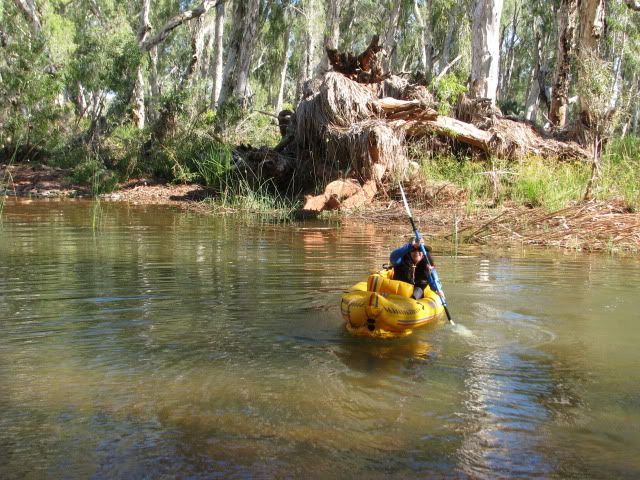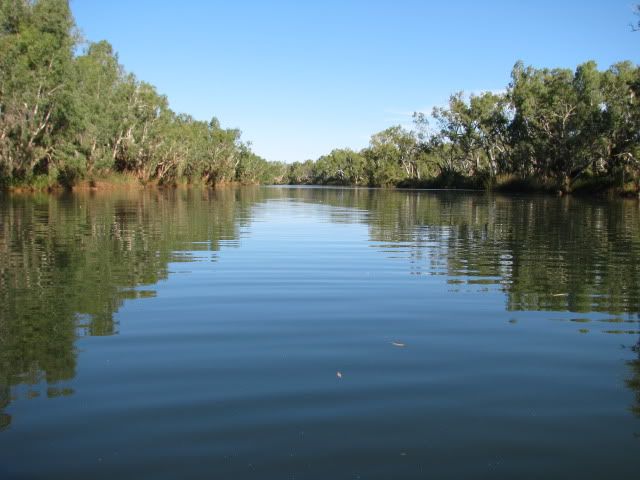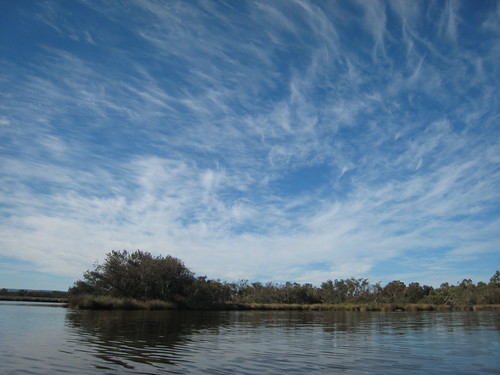
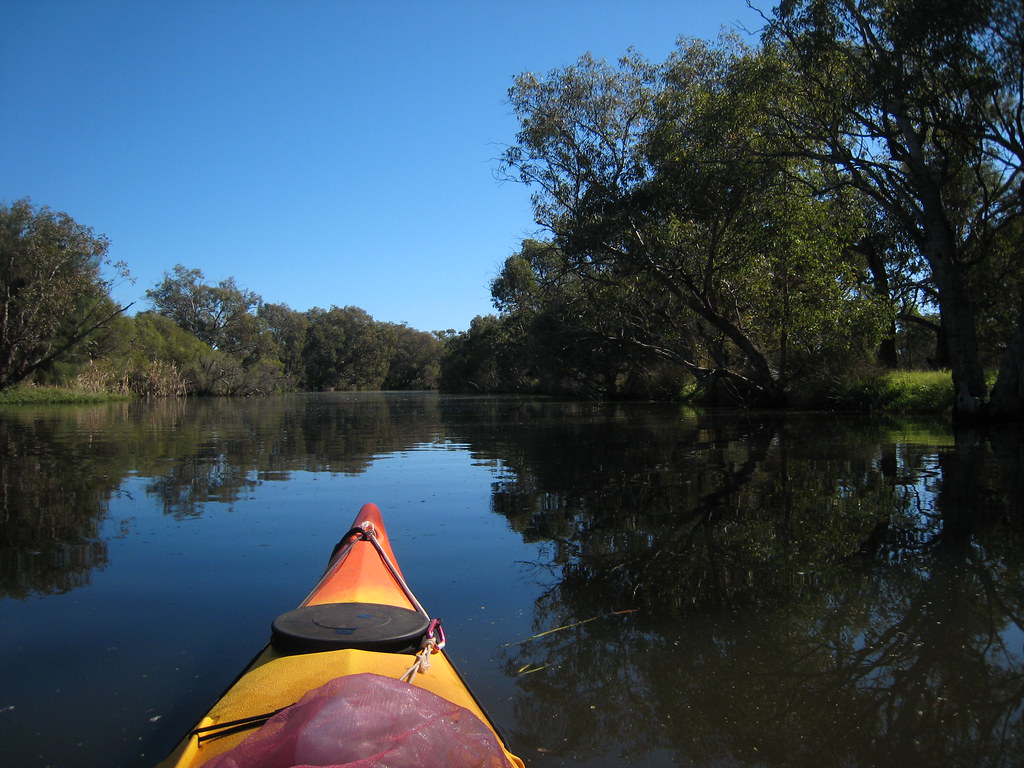
I endorse this strentch of the Swan River as a scenic and relaxing paddle. Go as fast or slow as you wish - there is no worry from the usual blights on the river: powered idiots in their pretentious stink boats trailing hoards of screaming brats in sea biscuits and terrorising squadrons of jet skiis. It is popular with recreational floaters, multisport trainers and that new creature that has recently appeared on our waters - the kayak fisherman (who more often seems to be using foot pedals or a small outboard).
Yes - the route from Shelley Bridge to the Kent St Weir is the start of a nice paddle under the shade of sheoaks (Casuarina obesa), swamp paperbarks (Melaleuca rhaphiophylla) thickets, tall stands of flooded gums (Eucalyptus rudis) and upwards further for about 7 kms to Nicholson Rd. It is all part of the Canning River Regional Park, and information on the paddle can be found here and here.
 It starts off at at a wide delta in the estuary dominated by sheoaks and paperbark thickets over thick stands of reeds and sedges (Isolepis and Juncus). Here you pass mobs of Australian pelicans, darters, pied and little black cormorants, Pacific black ducks, silver gulls and grey teal. Many birds do nest here, and I recently (4 weeks ago) spied the nest of a strange, squawking, so-ugly-they're-beautiful-and-disturbing-at-the-same-time darter chicks.
From there on, the river narrows to form several distant channels - so you can easily follow a channel to a dead end. No drama - all part of the fun. And the casuarinas here are full of mistletoe birds, mistloes, and I've spotted rufous whistlers, grey fantails, the ever-present angry willy wagtails, demented purple swamp hens, buff banded rails, white-faced herons, Australiasian coots, dusky moorhens, great egrets, osprey, collared sparrowhawks, whistling kites, brown honeyeaters, singing honeyeaters, wattlebirds, magpies, blue wrens, pee wees and kingfishers. Just to name a few.
And there is a really nice patch of Hakea prostrata in all its non-prostrate, fully erect, 3 m shrub form. This would have been more extensive vegetation structural association, but now you only get a few decent stands of tall shrubs of this species in the Perth area.

 |
| Mr Darter, in full breeding plumage - photo- Mr Dillon |
And so you can paddle on until you pass the Castledare Minature Railway station - a boon for anorak-wearing, little-train buffs - and swing around the corner to the weir at Kent street. This weir was installed to prevent salt water from reaching into the upper reaches of the Canning river and affecting farmland on the Canning plains. You will have to portage over this and head on up a few more kilometeres until the river becomes log-jammed, or you wish to turn around for the return leg.You may notice little freshwater fish species (like the pygmy perch) in the waters above the weir.
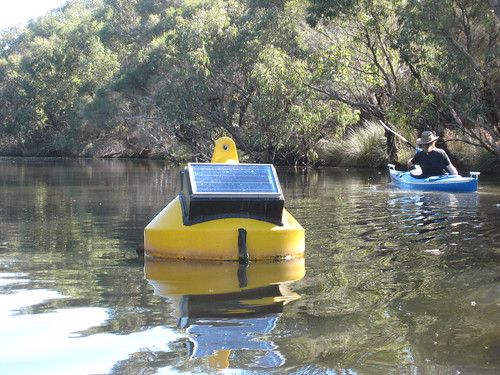 And you may pass these yellow things - they are oxygenators, which are an attempt to oxygenate the stagnant, eutrophic waters of the Canning River. Desperate measures - but certainly controlling the fertiliser inputs into the system would help - wouldn't they, eh? (i.e. tighter regulation of fertiliser use seems to be stalled).
Time of year to paddle: Anytime. It might rain one day in Perth, and this may even one day cause some water to spill over the weir. But don't get your hopes up.
Skill level: easy peasy grade 1 flatwater. Exposed, open stretches will become choppy and windswept if there are strong winds or stiff sea breezes.
Attractions: Pleasant easy kayak in a little bushland setting. Lose yourself in the middle of the city - you can forgot for a while all the crappy MacMansion developments and just immerse yourself in the riparian environment and imagine what the wider area was like ages ago.
Location: 9 kilometres south-east of Central Perth, in the Canning Regional Park. The park extends for approximately 6 kilometres along the Canning River between the Shelley and Nicholson Road Bridges.
Entry points: Loads. We start at Shelley Bridge, but you can start at Kent St Weir or other points along river.
Note: Pluses: sheltered waters, no powerboats, loads of birds and plants, loads of picnic spots.
Minuses: low water flows means the water quality can be poor (hence the oxygenation pumps), with algal blooms and even Azolla and invasive Hydroctoyle infestations. A recent fire (Feb 2011) has damaged vegetation upstream of Kent St Weir.
The Kent Street Weir usually has to be portaged, and that pinic area can become very busy on weekends.
More information - More information on the park and its critters can be found here.