September 1st is Wattle Day -
huzzah -
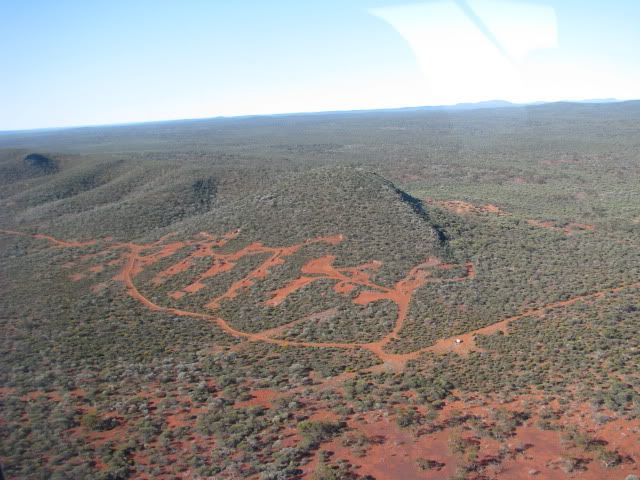
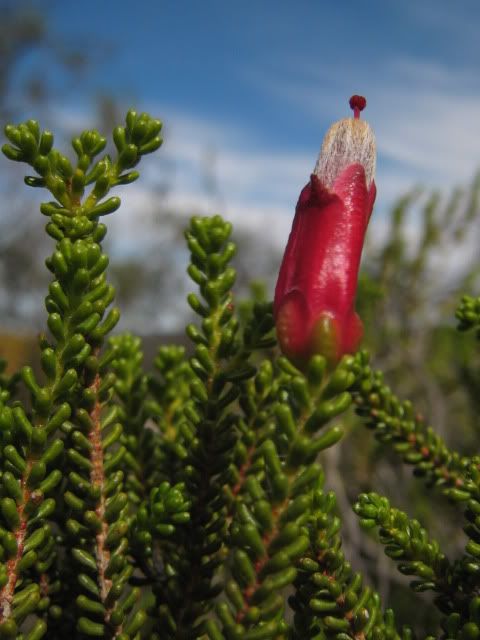
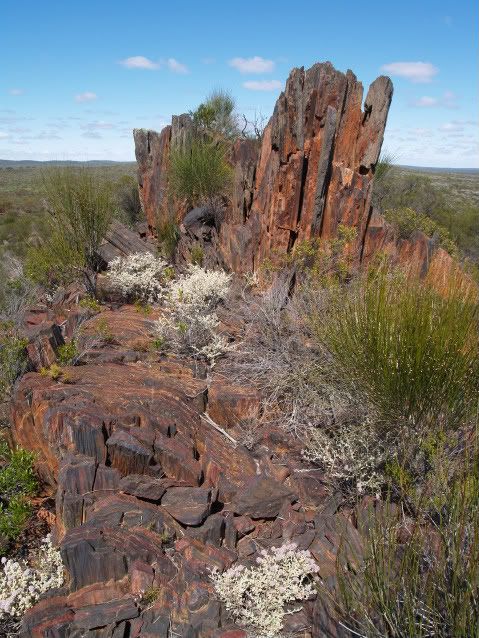
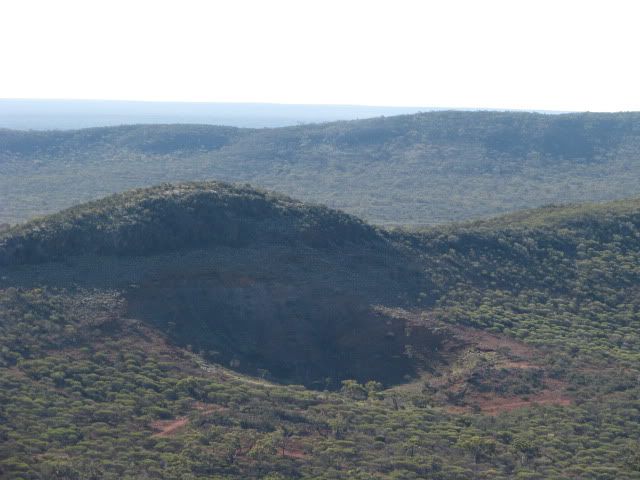
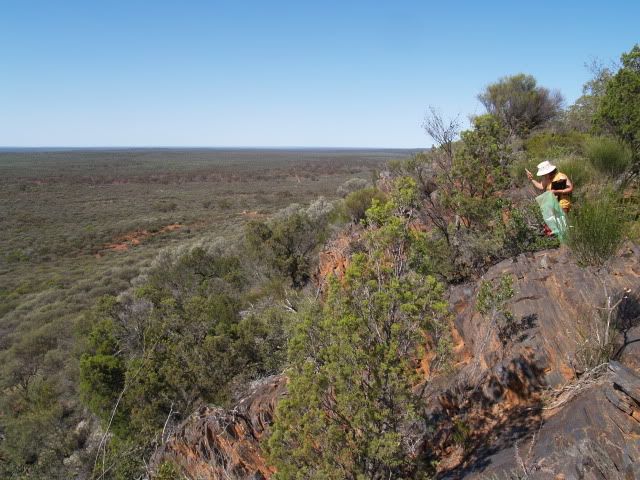
So I'm using this day to profile a little wattle battler - Woodman's Acacia or Acacia woodmaniorum. This shrub straggles its way over the banded iron formation (BIF) ranges near the Blue Hills, in the midwest of Western Australia. This is this only place where it grows, miles away from its presumed closest relative (Acacia alata var. biglandulosa). The description is here.
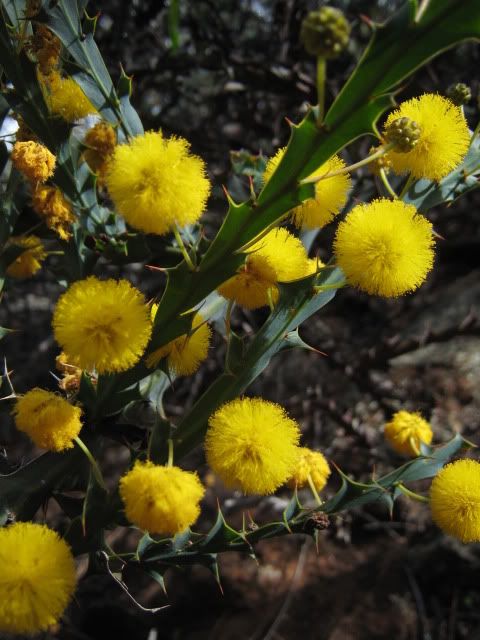
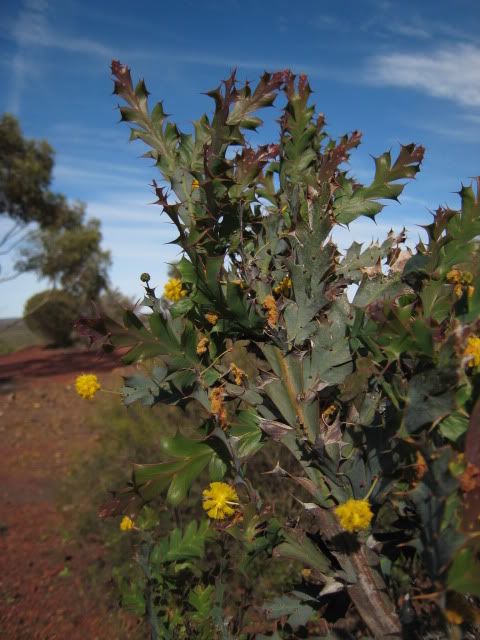
It has angular stems and flattened phyllodes which are decurrent along the stems of branchlets - making this another winged wattle. The flowers are bunched in solitary little pom-pom inflorescences which pop out of the stems on moderately long peduncles. Despite the 'leafy, green' appearance, this plant packs of punch of spines on the phyllode tips.
Named after the three Woodman brothers of local botanical fame in Western Australia , this wattle was named and declared rare as soon as surveys in the midwest established that it was new and very restricted in distribution. The greates threats this little hardy acacia faces is open cast iron ore mining, since its preferred habitat is atop the haemtite-rich hills of BIF. It will pop up in crush rock spoils, to a degree.
This species shares it habitat with other interesting and plants like the Drummondita fulva (endemic to the Blue Hills - Yalgoo region), Rhodanthe collina and generally splendid and species rich Acacia - Melaleuca nematophylla shrublands, rich heaths and stands of Callitris columellaris on rocky hillslopes and ridge tops.
Given how incrediblely flat the general midwest region is - these are truely outstanding landforms with differnet plants and communities on the tops from the vast surrounds of seemingly endless mulga - bowgada shrublands.
Mundane observations from a height-challenged cynic about defending the smaller critters that get in the way..
Showing posts with label midwest flora. Show all posts
Tuesday, August 31, 2010
Friday, May 14, 2010
Velleia rosea
Pink velleia, Rosy velleia (Velleia rosea S.Moore).
This little herb in the Goodeniaceae family is a cheery addition to the inland, semi-arid to arid regions of midwest Western Australia. With a little winter rain, you'll find these wee, pink or lavender flushed flowers in spots and dots and fits and starts. After a decent soaking of welcome winter rainfall, this annual will form a carpet of colour that can transform a parched stand of straggely mulga (Acacia aneura) or ugly roadside rest bay (usually littered with pie-wrappers, toilet paper and beer bottles) into a little, exquisite floral wonderland.
This is one beast that I take for granted as common, but really is an endemic species of Western Australia and significant component of the winter 'desert ephemeral' flora. In flower, Velleia rosea is distinctive because of the large flowers (c. 15. - 2 cm diam., petals 1.3 cm long). But when in fruit, it can be easily confused with Velleia cycnopotamica, which has far more dainty, smaller flowers (c. 1 cm diam.) with narrow petals (corolla lobes lacking wings). Both species are sprawling little herbs, with a basal rosette of leaves and few-branched inflorence stalk with flowers arranged in cymes.
I didn't notice until it was pointed out to me by a hopeless romantic that the petals were indeed heart shaped. I just refered impassively to them as emarginate or cordate or winged, and didn't think of the flowers in any emotive way. But there ya go - they're heart-shaped and pale rose in colour, with a blush of deeper rose-magenta in the throat. I will note that descriptions of flower colour may vary with the observer, but I would hesitate to describe the colour as fuchsia and settle on rose, lilac, pale lavender or pale pink, ranging to white.
Whatever your choice of colour description, make sure you take the time out to stop for a rosy flush of Velleia rosea on a midwest winter roadtrip.
Labels:
Goodeniaceae,
midwest flora,
Velleia,
wildflowers
Sunday, May 2, 2010
Lawrencia helmsii
Lawrencia helmsii (Malvaceae): Dunna dunna.
If you are travelling through the midwest regions of Western Australia, you may chance upon this chunky, straggely, cactus-like shrub that's about 1 - 1.5 m tall and just as wide.
It isn't a cactus, despite appearances, and we don't have Cactaceae native to Australia. But, it is a member of the mallow or hibiscus family (Malvaceae) and is a hardy occupant of dry, rocky gypsum and calcrete soils in the midwest regions of Western Australia. These tend to be mineral-enriched, clayey, saline, basic soils (pH abouts 8.0 ), often on or around rocky rises and saline / gypsum flats. This one we encountered was c. 70 km - 100 south of Newman, but we failed to take notice of exactly where we were along a seemingly endless stretch of the Great Northern Highway. No doubt however - we were at the extreme northern limit of its distribution.
Despite initial appearances as a chunky monstrosity, Lawrencia helmsii - the Dunna Dunna, is a intricate plant when explored up close. If you look carefully at one of the many hundreds of tiny flowers which crowd along on the stems, you see that it is close to a mallow or hibiscus flower. Well - you are hard-pressed to see much really, and you need a bit of imagination. And these flowers are about -- oh - about 5 mm in diameter. This is a flower from a male plant which I have photographed - the species is actually dieocious. There is not much to these male flowers - five tiny reddish-green petals, a staminal column with a cluster of anthers at the top. The female flowers are similar, but with more style and less dangly bits.

These flowers are emerging directly from the woody stem on a very, very short stalk (they're close to sessile, really), between the tightly packed, very short branches crowded with tight clusters of scaley leaves. Looking at the stems in detail is like a trip into an ever-shrinking world of tiny, fine features. There are about 14 species/taxa of Lawrencia in Western Australia (which is the sum total of the species in Australia), and a couple of these are equally as bizarre as L. helmsii (like L. chrysoderma). I have included informally named taxa in that count.
Lawrencia helmsii has been described as a succulent, but that's only really because the tiny, tiny leaves are sort-of succulent. I'm not convinced. The stem is certainly not - it is woody and tough and sort of spongy like balsa wood. These main stems are certainly not a source of juice or water for the thirsty in the desert.
Because these are such weird-looking plants, there is some interest in growing them as an ornamental - but they grow in such a relatively extreme habitat that I'm not sure how they would go in an ordinary garden - unless you lived on a gypsum flat.
If you are travelling through the midwest regions of Western Australia, you may chance upon this chunky, straggely, cactus-like shrub that's about 1 - 1.5 m tall and just as wide.
It isn't a cactus, despite appearances, and we don't have Cactaceae native to Australia. But, it is a member of the mallow or hibiscus family (Malvaceae) and is a hardy occupant of dry, rocky gypsum and calcrete soils in the midwest regions of Western Australia. These tend to be mineral-enriched, clayey, saline, basic soils (pH abouts 8.0 ), often on or around rocky rises and saline / gypsum flats. This one we encountered was c. 70 km - 100 south of Newman, but we failed to take notice of exactly where we were along a seemingly endless stretch of the Great Northern Highway. No doubt however - we were at the extreme northern limit of its distribution.
Despite initial appearances as a chunky monstrosity, Lawrencia helmsii - the Dunna Dunna, is a intricate plant when explored up close. If you look carefully at one of the many hundreds of tiny flowers which crowd along on the stems, you see that it is close to a mallow or hibiscus flower. Well - you are hard-pressed to see much really, and you need a bit of imagination. And these flowers are about -- oh - about 5 mm in diameter. This is a flower from a male plant which I have photographed - the species is actually dieocious. There is not much to these male flowers - five tiny reddish-green petals, a staminal column with a cluster of anthers at the top. The female flowers are similar, but with more style and less dangly bits.
These flowers are emerging directly from the woody stem on a very, very short stalk (they're close to sessile, really), between the tightly packed, very short branches crowded with tight clusters of scaley leaves. Looking at the stems in detail is like a trip into an ever-shrinking world of tiny, fine features. There are about 14 species/taxa of Lawrencia in Western Australia (which is the sum total of the species in Australia), and a couple of these are equally as bizarre as L. helmsii (like L. chrysoderma). I have included informally named taxa in that count.
Lawrencia helmsii has been described as a succulent, but that's only really because the tiny, tiny leaves are sort-of succulent. I'm not convinced. The stem is certainly not - it is woody and tough and sort of spongy like balsa wood. These main stems are certainly not a source of juice or water for the thirsty in the desert.
Because these are such weird-looking plants, there is some interest in growing them as an ornamental - but they grow in such a relatively extreme habitat that I'm not sure how they would go in an ordinary garden - unless you lived on a gypsum flat.
Labels:
Lawrencia helmsii,
Malvaceae,
midwest flora,
wildflowers
Saturday, May 1, 2010
Chthonocephalus pseudevax
Chthonocephalus - etymology: to have one's head stuck close to or in the ground. Literally meaning (in greek), "soil-head".

What a huge name for such a diminutive, unobtrusive plant. This little daisy grows in the more arid regions of Australia, on the impoverished silty clay loams which form the 'red sands' of the region. It is a spring annual (or desert ephemeral), and only really appears after good rainfall during winter months. The main thing is that it is tiny! The heads (compound capitula) are only 1 - 3 cm in diameter, the plant is little more than a compact plant with a nice tap root, a whorl of leaves and then a compact compound flower head of tiny flowers (the florets).
Until Phil Short's review in 1990, there really was only about three species of Chthonocephlus. Now there are at least seven species, all very cryptic and requiring some detailed microscope work to work out whom is who. Chthonocephlus pseudevax is the common woolly groundhead, and is differentiated from the uncommon C. oldfieldianus by having 3 or 4 lobed florets instead of 5 lobed florets.
Not that you could possibly tell from a mere glance downwards. In fact, you'd be lucky to notice these plants at all if you weren't scanning the ground with a careful eye.
So next time you are walking among the wildflowers in the right area (i.e. inland Australia on red silty clay soils) - look down for Chthonocephalus - the little plant with the ridiculously big name.
Short, Philip S. (1990). A revision of the genus Chthonocephalus Steetz. (Asteraceae : Inuleae : Gnaphaliinae). Muelleria Vol. 7:225-238. National Herbarium and Botanic Gardens. Melbourne.
Addendum - I suspect that the image on Florabase website is not C. pseudevax but C. viscosus. Given that the premises are about to move, now is not a good time to tell them that that image and its voucher needs reconsideration.
Labels:
Asteraceae,
Chthonocephalus,
midwest flora,
wildflowers
Subscribe to:
Posts (Atom)